Developing Your Spiritual Practice, Mondays, February 2, 9, and 16, 2026 at 7pm.
Most of us have practices that help us feel spiritually grounded. Some practices involve prayer and meditation, while others are as simple as listening to music or being outdoors. CJC’s Spirituality Chavurah is launching a hybrid three-part series, which will explore a variety of spiritual practices to help you develop or strengthen your own.
The series will begin at the close of Tu Bishevat, a holiday that elevates the practice of saying blessings. We will examine Jewish texts that shed light on the most essential kabbalistic concepts, such as the Four Worlds and the Sefirot. Free for CJC members; $36 for non-members.
A useful resource: https://www.myjewishlearning.com/article/sefirot/
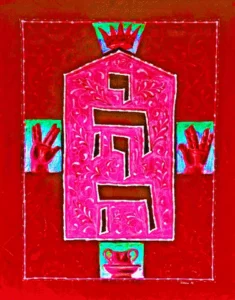 “The Mystical Dimensions of God’s Ineffable Name”, The Spiritual Teachings of Rabbi Moshe Heyn
Wednesdays, June 11, 18 & 25, 2025 – Spiritual Technologies: a 3-part series, 7pm
Reb Zalman Schachter-Shalomi was known for his innovative approach to spirituality and his emphasis on “spiritual technologies” as a means to deepen connection with oneself and the divine. He saw these technologies as methods to cultivate spiritual awareness and practice, drawing inspiration from diverse traditions and cultures. They include niggunim (wordless melodies), prayer, study, meditation, storytelling, and rituals like the shofar.
Reb Moshe will open the series with insights into the history, structure, and inner workings of Jewish prayer (June 11). Philip Chapnick will share what blows his mind when he blows the shofar (June 18). In the third session (June 25), Aryae Coopersmith will share how he connects deeply with Jewish prayer and Wendy Berk will close out the series by sharing how she connects deeply with niggunim.
Jewish Renewal movement, January, 2025, taught by Rabbi Moshe
There was a great deal of interest in our series last month on Neo-Hasidism. This is a follow-up 3-part series to examine the Jewish Renewal movement’s impact on Jewish life in America and its significant impact on our own community. We will be joined by several accomplished Renewal rabbis, including Rabbis David Zaslow and Victor Gross, who will guide us in our own exploration of Jewish spirituality. How can we become our best selves in community?
Neo Hassidism, October-November, 2024, taught by Rabbi Moshe
Progressive Jews are accustomed to seeing Hasidism as a fundamentalist, socially conservative, and strictly hierarchical ideology. Today’s Hasidic communities are led by exclusively male religious authorities, and exclude women from communal leadership.
Yet Hasidic Judaism was, at its inception, a radically democratic movement. The students of a charismatic 18th-century Ukrainian mystic, known as the Ba’al Shem Tov, hoped to leave behind the rabbinic elitism of their time. They sought to create a populist culture of piety and devotion in which every Jew, regardless of their education, could access the deepest secrets of the mystical tradition, and find an immediate experience of God in even the most mundane moments of their lives.
An Introduction to Coastside Mussar, January, 2022, taught by Rabbi Moshe
View the recording of this class
Throughout our various Mussar classes, R’Moshe helped us to establish Chevruta, study groups, several of which are still meeting.
Integral Judaism – July, 2021
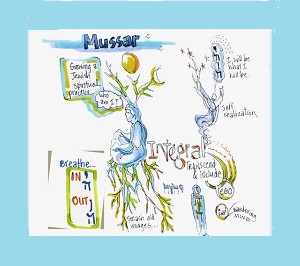 Integral Judaism is a synthesis of Jewish mysticism, humanism, and the science of meditation and mindfulness. It builds upon the principles and practice of Mussar by adding a spiritual component that works for people who believe in God as well as those who don’t believe in God. This three-part series will cover the theory and practice of Integral Judaism, demonstrating how it can enrich not only one’s approach to Mussar, but to life in general.
1) July 6, Introduction: the theory of Integral Judaism
2) July 13, The Practice: Jewish meditation for theists and non-theists
3) July 21, Continuing: the benefits of incorporating Integral theory and practice into your daily life
Coastside Mussar: A God Optional Approach
The previous class focused on Mussar, and was based on “Everyday Holiness: The Jewish Spiritual Path to Mussar”, by Alan Morinis. The class ran from December 1, 2020 through March 23, 2021. The class included two distinct parts, one academic, the other a Practicum wherein participants practiced Middot.
The last session featured Rabbi David Jaffe, who spoke about the integration of social activism with Mussar.
An Introduction to Mussar
In Spring of 2020, Rabbi Moshe offered our first Mussar class, which became named “Cohort Aleph” when attendance continued to grow, and R’Moshe decided to start a 2nd group called “Cohort Bet”. Both groups used Greg Marcus’s book “The Spiritual Practice of Good Actions: Finding Balance Through the Soul Traits of Mussar”
3/23/2021: Changing the World from the Inside Out with guest speaker Rabbi Jaffe, a nationally recognized leader in the contemporary Mussar movement,.
11/6/2020 – Interfaith Refugee Shabbat
10/24/2020 – The Jew in the Lotus – The Past, Present and Future of Jewish-Buddhist Coherence
4/25/2020 – Let My People Know